Strategic Economic Assessment of Paulownia: Resource Analysis and Global Market Dynamics
Macroeconomic Fundamentals of Paulownia Cultivation
Paulownia plantations represent a high-density biological asset class that fundamentally disrupts traditional timberland investment timelines. In the current global economic climate, characterized by a transition toward bio-based economies, Paulownia functions as a high-velocity renewable resource. The primary economic driver is the extreme biological growth rate, which allows for a compressed capital rotation cycle of 7 to 10 years. This timeline is significantly shorter than the 30-to-50-year cycles required for traditional hardwoods, drastically improving Net Present Value (NPV) and reducing the duration of capital exposure for institutional investors. By accelerating the transition from capital expenditure to revenue generation, Paulownia mitigates the liquidity risks inherent in conventional long-term forestry.
Institutional Investor Appeal and Financial Modeling
From a financial perspective, Paulownia serves as an effective hedge against inflation and market volatility. As a tangible biological asset, its value correlates with physical growth rather than purely speculative market sentiment. Financial analysts utilize Internal Rate of Return (IRR) projections that account for multiple exit points, including early-stage biomass thinning and final high-grade timber harvesting. The integration of Paulownia into diverse investment portfolios provides a non-correlated asset that stabilizes long-term returns. Furthermore, the application of International Financial Reporting Standards (IFRS), specifically IFRS 41 regarding biological assets, allows for the transparent valuation of plantation growth, enabling investors to track asset appreciation in real-time throughout the cultivation cycle.
Market Demand Drivers and Industrial Resource Integration
The global market for Paulownia timber is expanding due to its unique technical profile as a "lumber grade" material with "composite-like" weight characteristics. Industrial demand is concentrated in sectors where high strength-to-weight ratios are critical for operational efficiency. In the transportation and logistics market, Paulownia is utilized to reduce the curb weight of electric vehicles and shipping containers, directly lowering energy consumption. In the construction sector, the market is shifting toward engineered wood products, such as Cross-Laminated Timber (CLT) and Laminated Veneer Lumber (LVL), where Paulownia serves as a lightweight core material. This diverse industrial utility ensures a robust demand floor, protecting investors from price fluctuations in any single niche market.
Strategic Revenue Stacking and Carbon Market Monetization
The economic viability of Paulownia is further enhanced through "revenue stacking," a strategy that extracts multiple financial streams from a single geographic hectare. Beyond primary timber sales, the resource produces secondary revenue through the sale of biomass for renewable energy markets and the generation of Carbon Offset Credits. Paulownia’s capacity to sequester up to 100–150 metric tons of CO2 per hectare annually positions it as a premier asset in the burgeoning Voluntary Carbon Market (VCM) and compliance markets like the EU Emissions Trading System (ETS). For investors, these credits represent immediate annual liquidity, offsetting operational maintenance costs and improving the overall cash flow profile of the plantation before the final timber harvest.
Regional Economic Hubs and Supply Chain Optimization
The development of Paulownia "Green Economic Hubs" demonstrates the capacity for this resource to catalyze regional industrial growth. By establishing primary processing facilities—including precision sawmills, kiln-drying units, and pelletization plants—near the site of cultivation, operators minimize logistical overhead and maximize value-added margins. This vertical integration transforms raw biological resources into market-ready industrial components within a centralized geographic zone. Regional economic hubs, such as those established in Eastern Europe and the Mediterranean, prove that Paulownia can revitalize rural economies by creating specialized jobs in both high-tech silviculture and advanced wood processing.
Technical Risk Mitigation for Market Readiness
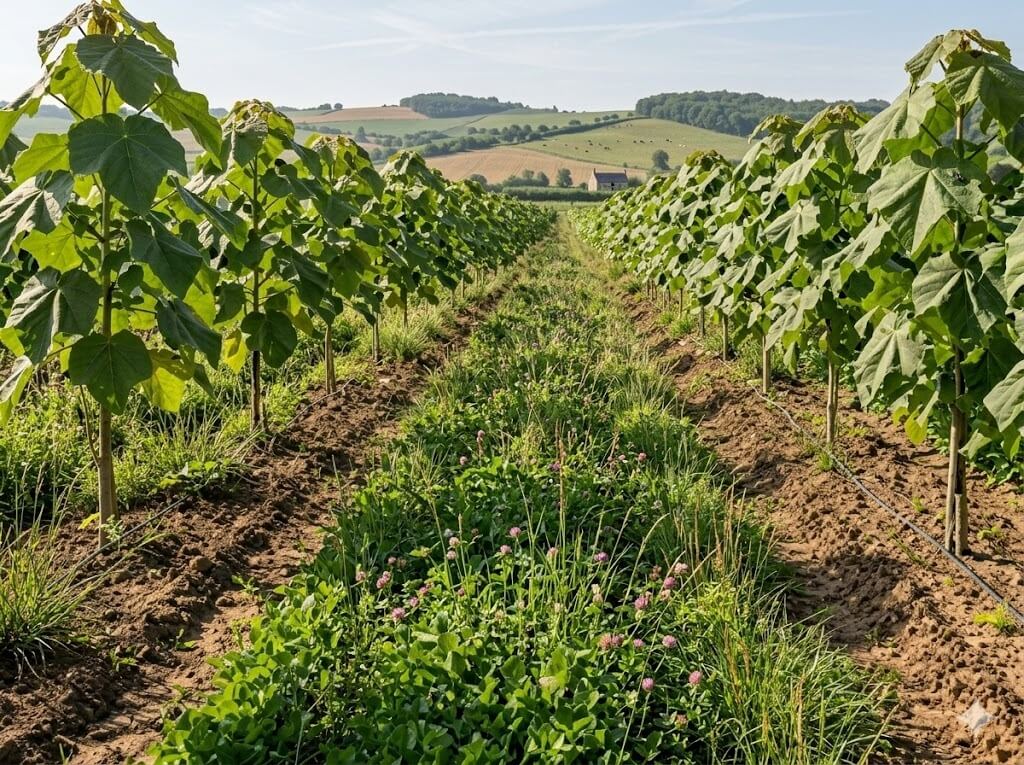
To ensure maximum market value, investors must focus on technical management protocols that produce "A-Grade" timber. This involves intensive silvicultural interventions, including systematic pruning to ensure knot-free wood and precision irrigation systems to optimize annual growth rings. Market premiums for high-quality Paulownia wood are substantial, often exceeding the price of standard construction-grade lumber by 300% to 500%. By adhering to strict technical standards and obtaining international certifications (such as FSC or PEFC), plantation managers ensure that the final resource meets the rigorous compliance requirements of the global timber trade, securing reliable exit liquidity and long-term economic sustainability.