Maximizing Plantation Efficiency: Technical Mechanics of Paulownia Intercropping and Interculture
Overview of Paulownia Interculture
Implementing an interculture system with Paulownia optimizes land-use efficiency and establishes a dual-revenue generation model. Paulownia intercropping pairs high-value timber cultivation with agricultural cash crops, maximizing spatial utility—particularly during the initial two to three years of timber canopy development before crown closure.
Root Stratification and Resource Partitioning
The primary agronomic advantage of Paulownia in an intercropping matrix is its deep taproot architecture. Paulownia root networks descend 5 to 6 meters vertically, extracting subterranean moisture and nutrients from subsoil horizons strictly below the 40 cm mark. This vertical partitioning eliminates direct resource competition with shallow-rooted intercrops. Plantation operators cultivating surface-level crops, such as field vegetables, commercial strawberries, or legumes, benefit from isolated root zones that ensure uninterrupted hydration and nutrient uptake for both crop tiers.
Microclimate Regulation and Yield Optimization
Paulownia canopies engineer a regulated microclimate advantageous for sensitive understory growth. The foliage functions as a biological buffer against high-velocity winds and intense solar radiation. Empirical data indicates that Paulownia interculture systems reduce peak summer topsoil temperatures by 0.2°C to 1.5°C. This thermal mitigation prevents heat stress in adjacent crops, optimizing biochemical synthesis. Documented field trials demonstrate that intercropped flora exhibits significant increases in vital compounds; for example, tea cultivated under Paulownia shows elevated amino acids and polyphenols, resulting in a 15% appreciation in raw material market value.
Soil Nutrient Cycling and Biomass Contribution
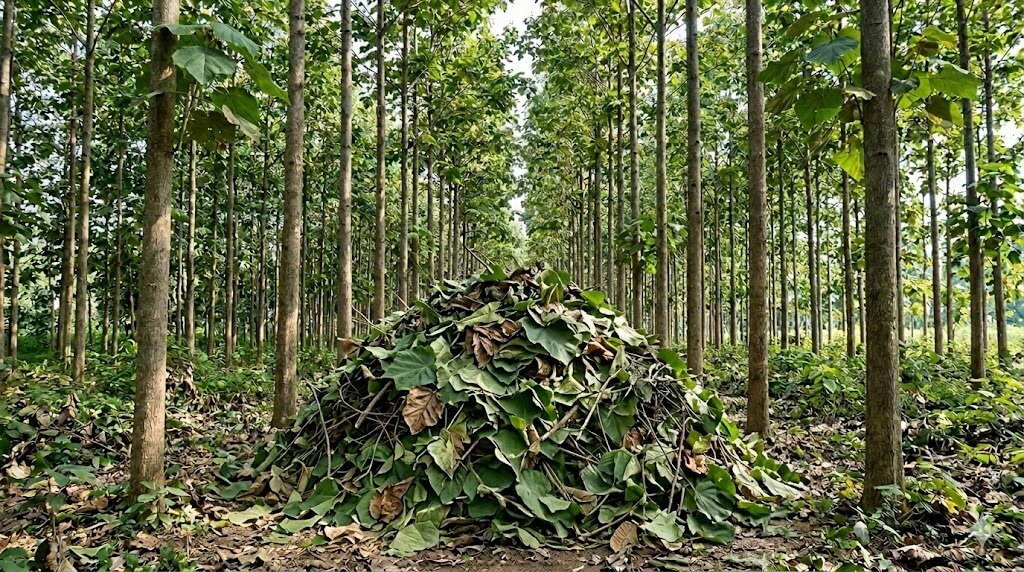
Integrating Paulownia systematically alters soil chemistry through continuous organic matter deposition. Paulownia leaves and inflorescences contain 16% to 20% nitrogen by dry mass. The annual defoliation cycle deposits substantial volumes of high-protein biomass onto the topsoil layer. Rapid biological decomposition converts this material into a dense humus layer, functioning as a natural nitrogen fertilizer for the intercropped species. This cycle improves soil aeration, mitigates compaction, and reduces plantation reliance on synthetic nutrient inputs. Furthermore, harvested foliage can be diverted as high-protein livestock feed.
Spatial Configuration and Commercial Crop Selection
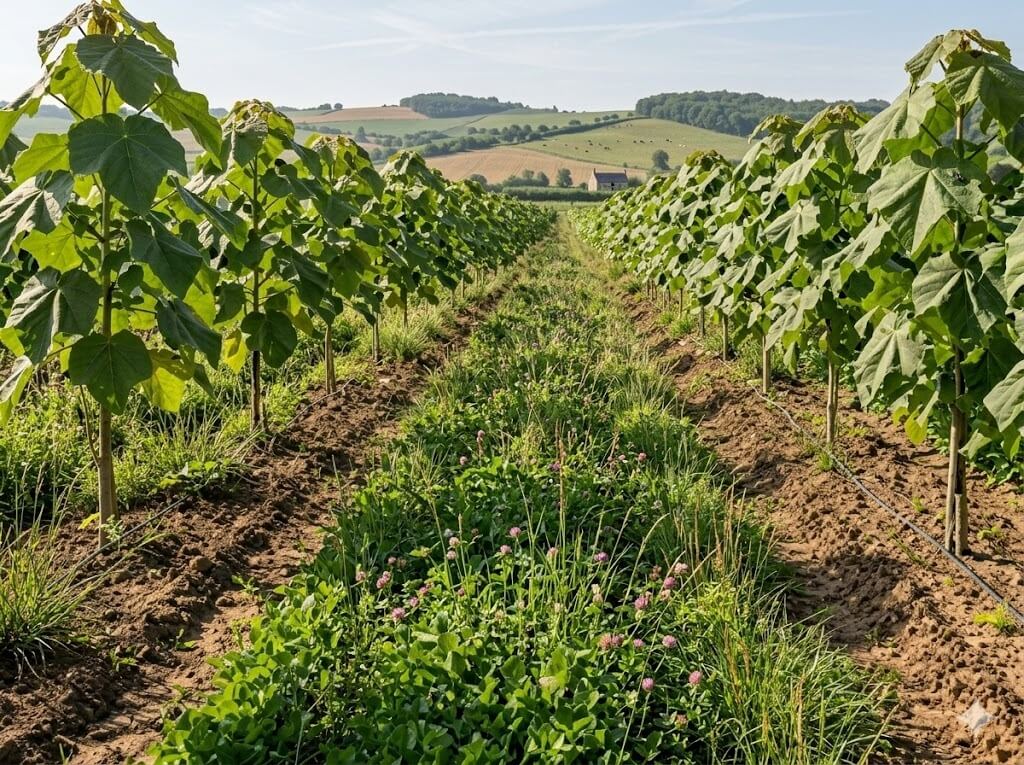
Optimal plantation geometry requires precise row spacing tailored to the specific intercrop's mechanical and biological requirements. Standard commercial configurations utilize a 6-meter row spacing and 8-meter plant spacing for the timber stand, establishing operational cultivation alleys of 2 to 3 meters for cash crops. High-efficiency interculture pairings include:
- Cereals and Legumes: Wheat, corn, soybeans, peas, barley, and beans.
- Horticulture and Botanicals: Tea, medicinal plants, and commercial berry cultivars (e.g., strawberries, raspberries).
- Tropical Agriculture: Coffee, cocoa, cotton, and plantain.
Strategic Output
Deploying Paulownia intercropping maximizes total agronomic output per hectare. Leveraging stratified root zones, thermal buffering, and biological nitrogen cycling ensures elevated cash crop yields parallel to prime timber maturation.