Paulownia: A Renewable Green Resource for Accelerated CO2 Mitigation and Oxygen Generation
Photosynthetic Architecture and Carbon Dioxide Sequestration
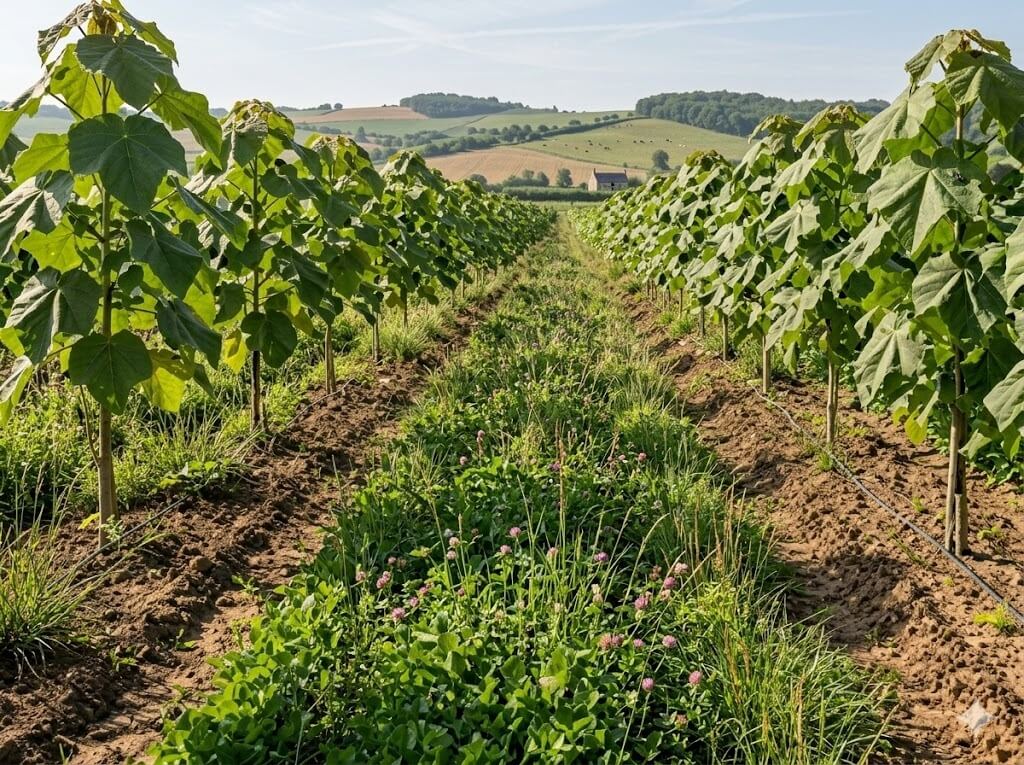
Paulownia comprises a genus of rapidly developing hardwood species optimized for maximum biomass accumulation and extreme carbon dioxide (CO2) sequestration. Driven by exceptional stomatal conductance and massive leaf surface areas (frequently exceeding 80 centimeters in diameter), Paulownia maximizes photon absorption and gas exchange efficiency. The genus operates on an accelerated biological timeline, achieving commercial timber dimensions within a 5-to-8-year rotation cycle. This rapid volumetric expansion requires continuous atmospheric carbon assimilation.
Empirical data indicates that a standard one-hectare commercial Paulownia plantation sequesters between 100 and 150 metric tons of atmospheric CO2 annually during peak vegetative phases. Quantitatively, a single mature Paulownia tree processes up to 22 kilograms of CO2 annually. By continuously extracting atmospheric carbon to synthesize complex lignocellulosic structures, Paulownia operates as a primary vegetative asset for achieving mandated 2050 greenhouse gas (GHG) mitigation targets. The physiological corollary to this aggressive carbon fixation is the volumetric emission of molecular oxygen. A single hectare of mature Paulownia releases roughly 6 kilograms of pure molecular oxygen daily. This high-volume atmospheric exchange functions as a high-capacity biological scrubber, stabilizing atmospheric profiles within urban environments and industrial buffer zones.
Thermodynamic Metrics of Renewable Bioenergy
Beyond atmospheric regulation, Paulownia constitutes a highly efficient renewable bioenergy resource that bypasses the logistical bottlenecks of traditional hardwood forestry. The harvested biomass exhibits an exceptionally rapid desiccation rate, dropping from a harvest moisture content of 50-60% to a combustible 10-12% within 30 to 40 days of ambient air drying. This rapid moisture reduction minimizes the energy input required for artificial kiln drying, optimizing net energy yields.
The raw biomass extracted from short-rotation Paulownia plantations possesses a high heating value (HHV) approximating 19.5 to 20.2 MJ/kg. When processed into compressed bioenergy pellets, Paulownia achieves a bulk density exceeding 650 kg/m³. This high-density metric facilitates efficient transport and seamless integration into existing automated biomass boiler infrastructure. Utilizing Paulownia-derived pellets or chips in thermal power generation establishes a strictly closed-loop carbon cycle; the CO2 emitted during stoichiometric combustion is neutralized by the CO2 sequestered during the subsequent vegetative growth cycle. A dedicated Paulownia biomass plantation yields 40 to 50 tons of dry matter per hectare annually, outperforming traditional short-rotation coppice (SRC) species and solidifying its role as a structural green alternative for municipal renewable energy grids.
Phytoremediation, Soil Mechanics, and Green Economics
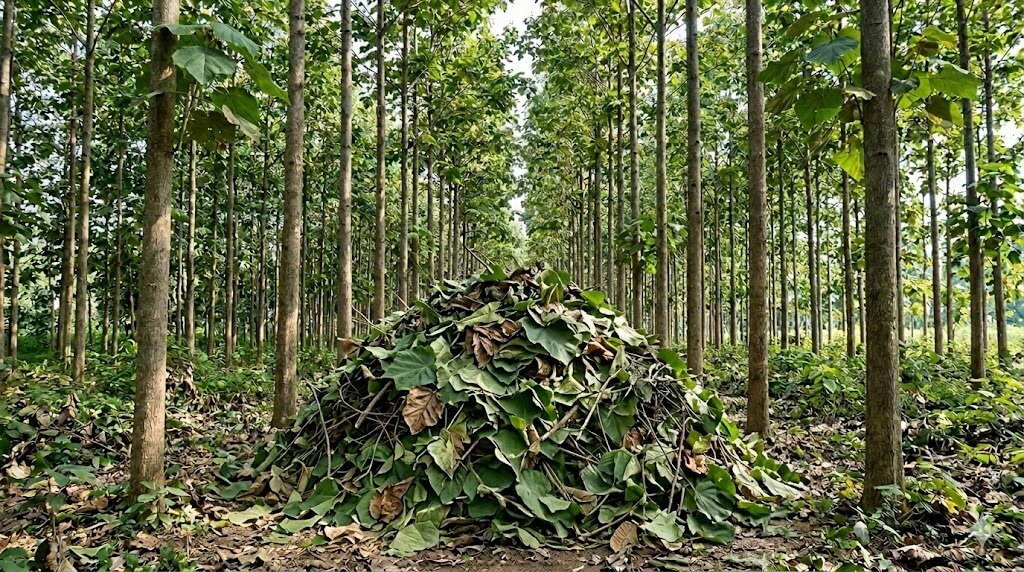
The deployment of Paulownia plantations extends structural benefits to terrestrial ecosystems. The deep-penetrating taproot and lateral root matrices provide extreme soil shear strength, functioning as biological anchors against hydrologic and aeolian erosion. Simultaneously, the system performs active phytoremediation, isolating heavy metals and neutralizing chemical toxins within industrially degraded subsoils. The annual shedding of nitrogen-dense foliage initiates rapid biological decomposition, reconstructing topsoil humus layers and restoring soil fertility without synthetic chemical inputs.
In the context of global green economics, these quantifiable environmental metrics allow commercial Paulownia forestry to integrate into international carbon offset markets. Commercial operators leverage precise biometric tracking to quantify CO2 sequestration with institutional accuracy. These verified datasets are subsequently packaged into tradable carbon offset certificates within compliance frameworks like the EU Emissions Trading System (ETS) and voluntary carbon markets (VCM). Monetizing verified CO2 sequestration rates transforms sustainable forestry into an immediate, high-yield financial instrument, establishing a scalable operational template for global atmospheric decarbonization.